Allotments can be amazing sites for wildlife. The variety of habitats can attract all sorts of animals, from pollinators visiting flowers to slugs, worms, and other invertebrates, which then bring in their predators, such as bats and foxes.
Amphibians and reptiles are a great natural form of pest control for
allotments.
Although reptiles and amphibians tend to be secretive as they move around in their habitats, some species can be seen on allotments, with frogs and newts being found in the damper spots, emerging at dusk to eat slugs and other invertebrates.
Unfortunately, many of our native amphibian and reptile species are in
decline, as they do not have the same public appeal that iconic
mammal species receive, such as hedgehogs, pine marten, and water voles.
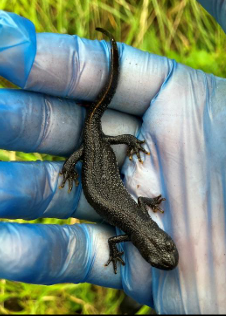
Newt sightings at the Weston Favell Allotments are not unusual. Three newt
species are native to the UK, and all are declining due to habitat loss. The
species you are least likely to see on your plot is the rare great crested newt,
scientific name Triturus cristatus, which has dark knobbly skin, and, in
courting males, a jagged crest runs down its back. It is one of the most
heavily protected species in the UK. If you discover one, it should not be
handled or disturbed without an appropriate licence.
The newts found on the Weston Favell Allotment plots are the Smooth newt (Lissotriton vulgaris), which is the most common of the newt species in the UK. This species is identified by a yellow/orange underside with small black
spots; they also have spots on their throat and can grow up to 10cm long.
During the breeding season, the males develop a crest along their back.
Newts move between water and land during their lifecycle. Between spring
and mid-summer, adults are found in freshwater ponds where they breed.
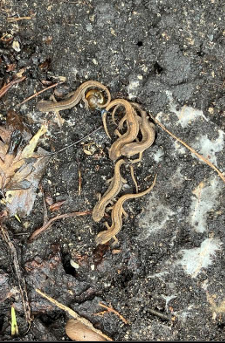
The females lay eggs in the leaves of aquatic plants. In their aquatic phase,
newts will eat almost anything they can fit their jaws around, and popular
mouthfuls include water snails, waterlogged insects, tadpoles, and
invertebrates.
Newts hunt at night, and from July to August, adult and juvenile newts leave
their breeding ponds and spend the rest of the year out of the water.
Plot holders might uncover them during this ‘land phase’ in dark places
such as under stones, logs, in compost heaps, under sheds and other
damp hideaways on their plot. On land they eat slugs, snails, and worms as
well as insects caught on their sticky tongues.
In October and November, the newts prepare for hibernation and will find a suitable hiding place for winter before the cycle begins again in February or March. The loss of breeding ponds and terrestrial habitats in the UK has negatively impacted newts and other amphibians.
Could you attract newts to your plot by providing possible hiding structures or winter hibernacula?
Amazing Fact
Smooth newts can regenerate their limbs, eyes, jaws, and organs throughout their lifespan. This remarkable biological ability, particularly their limb regrowth, sets them apart in the animal kingdom and makes them a subject of intense scientific interest as a model species for studying mechanisms of regeneration and in the future, may be useful in developing regenerative medicines/tissue repair in humans!
Article and Photographs by Graham Warnes